Tutorials
Getting started with Nigerian Treasury Bills
A comprehensive guide to understanding discount rates vs true yield, and buying risk-free Nigerian Treasury Bills through your local banking app.
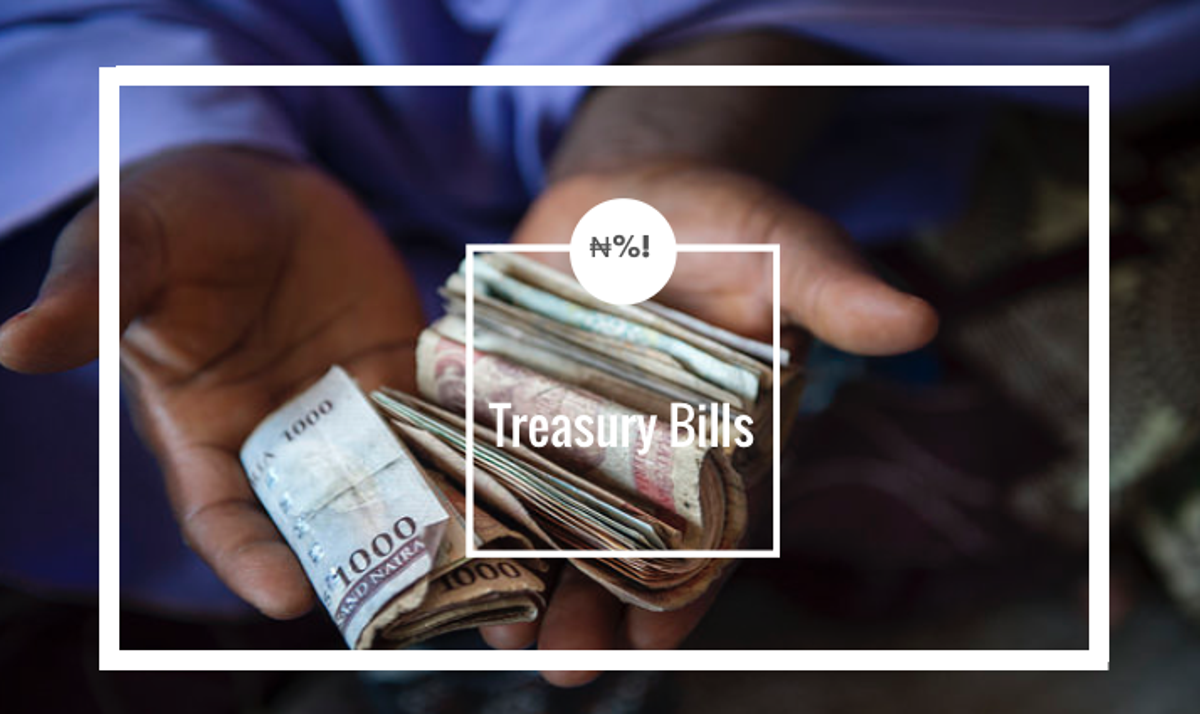
When the stock market feels too volatile, or the Central Bank of Nigeria (CBN) raises the Monetary Policy Rate (MPR), investors naturally flock to Nigerian Treasury Bills (T-Bills).
T-Bills are short-term government debt instruments. When you hold a T-Bill, you are essentially lending money to the Nigerian government for a period of 91, 182, or 364 days. In return, they pay you a fixed interest rate. Because they are backed by the full faith of the Federal Government, they are considered very low risk.
Here is everything you need to know about buying them directly from your smartphone.
Understanding the “Discount Rate” vs “True Yield”
This is the most common point of confusion for beginners. T-Bills are issued at a discount.
If you allocate ₦1,000,000 to a 364-day T-Bill with a 10% discount rate:
- You do not pay ₦1,000,000 upfront.
- The 10% interest (₦100,000) is deducted immediately.
- You only pay ₦900,000 today.
- At maturity (after 364 days), the government pays you the full ₦1,000,000.
The step-by-step process
Historically, you needed a stockbroker and millions of Naira to access T-Bills. Today, almost every major Nigerian commercial bank (GTBank, Zenith, Stanbic IBTC, FirstBank) allows you to subscribe to them directly from their mobile apps. For diaspora investors, Stanbic IBTC’s Money Market Fund offers a similar alternative without a local bank account.
How to get started with T-Bills on your bank app
-
Check the primary or secondary market rates
Log into your banking app and navigate to the Investments or Wealth tab. Look for “Treasury Bills.” The bank will display the available tenors (91, 182, or 364 days) and their current discount rates.
-
Choose your tenor and amount
Select the duration that matches your financial goals. If you need the money for rent in 6 months, pick the 182-day tenor. Enter the face value you want to select. Most banks have a minimum requirement of ₦50,000, but some require ₦50,000,000 for primary auctions. If you are starting with a small amount, the bank is likely fulfilling from its secondary market inventory.
-
Fund the transaction
Confirm the discount rate. The app will calculate how much will actually be debited from your account (Face Value minus the Discount). Ensure your savings or current account has sufficient funds.
-
Receive your mandate
Once the transaction is processed, the discounted amount will be debited. You will receive an electronic mandate or certificate confirming your T-Bill. Keep this safe, though the T-Bill is fully digital and linked to your identity verification.
Frequently asked questions
Frequently asked questions
Are Treasury Bills subject to tax?
Currently, returns on Nigerian Treasury Bills are exempt from personal income tax. You get to keep exactly what was promised at the discount rate.
What if I need my money before maturity?
You can liquidate your T-Bill before it matures on the secondary market. However, the rate you receive will reflect current market conditions. If rates have gone up since you first took the T-Bill, you may receive slightly less than the face value. T-Bills pay their full face value only at maturity.
Can I roll over my T-Bills automatically?
Yes. Many banking apps offer an “Auto-Rollover” feature. When your 364-day bill matures and pays you the ₦1,000,000 face value, the system will immediately reinvest it into a new 364-day bill at the new market rate.
Common mistakes and how to avoid them
- Treating the app as the market. Your broker or fintech shows a price, but settlement, ownership, and corporate actions sit with CSCS. If you skip the CSCS step you own the display, not the asset. Use our CSCS guide to confirm the account that actually holds the securities.
- Mixing up yield and return. A T-bill yield, a money market rate, and a stock dividend yield are quoted differently and land at different times. Map each to when cash actually hits your account using the Treasury bills starter and the FGN Savings Bonds walkthrough.
- Forgetting the settlement clock. Since June, NGX trades settle on T plus 1. If you sell to fund a new purchase, the cash is not instant. Check settlement timing in our T plus 1 explainer before you chain trades.
Keep a single checklist for every new product: where the asset is held, when cash settles, what fees apply, and where you verify the quote. Run that four-point check and most of the avoidable errors disappear.
Common mistakes and how to avoid them
- Treating the app as the market. Your broker or fintech shows a price, but settlement, ownership, and corporate actions sit with CSCS. If you skip the CSCS step you own the display, not the asset. Use our CSCS guide to confirm the account that actually holds the securities.
- Mixing up yield and return. A T-bill yield, a money market rate, and a stock dividend yield are quoted differently and land at different times. Map each to when cash actually hits your account using the Treasury bills starter and the FGN Savings Bonds walkthrough.
- Forgetting the settlement clock. Since June, NGX trades settle on T plus 1. If you sell to fund a new purchase, the cash is not instant. Check settlement timing in our T plus 1 explainer before you chain trades.
Keep a single checklist for every new product: where the asset is held, when cash settles, what fees apply, and where you verify the quote. Run that four-point check and most of the avoidable errors disappear.
Verify: check current auction results and stop rates on the Central Bank of Nigeria website.
Treasury Bills are the cornerstone of a defensive portfolio. By using your banking app, you can easily lock in high yields during inflationary periods without ever visiting a branch.