
News
Naira firms to N1,337 as reserves cross $53 billion
The naira closed at N1,337 per dollar on August 28 as FX turnover fell 49 per cent, while foreign reserves rose to $53.11 billion. What the two signals mean together.
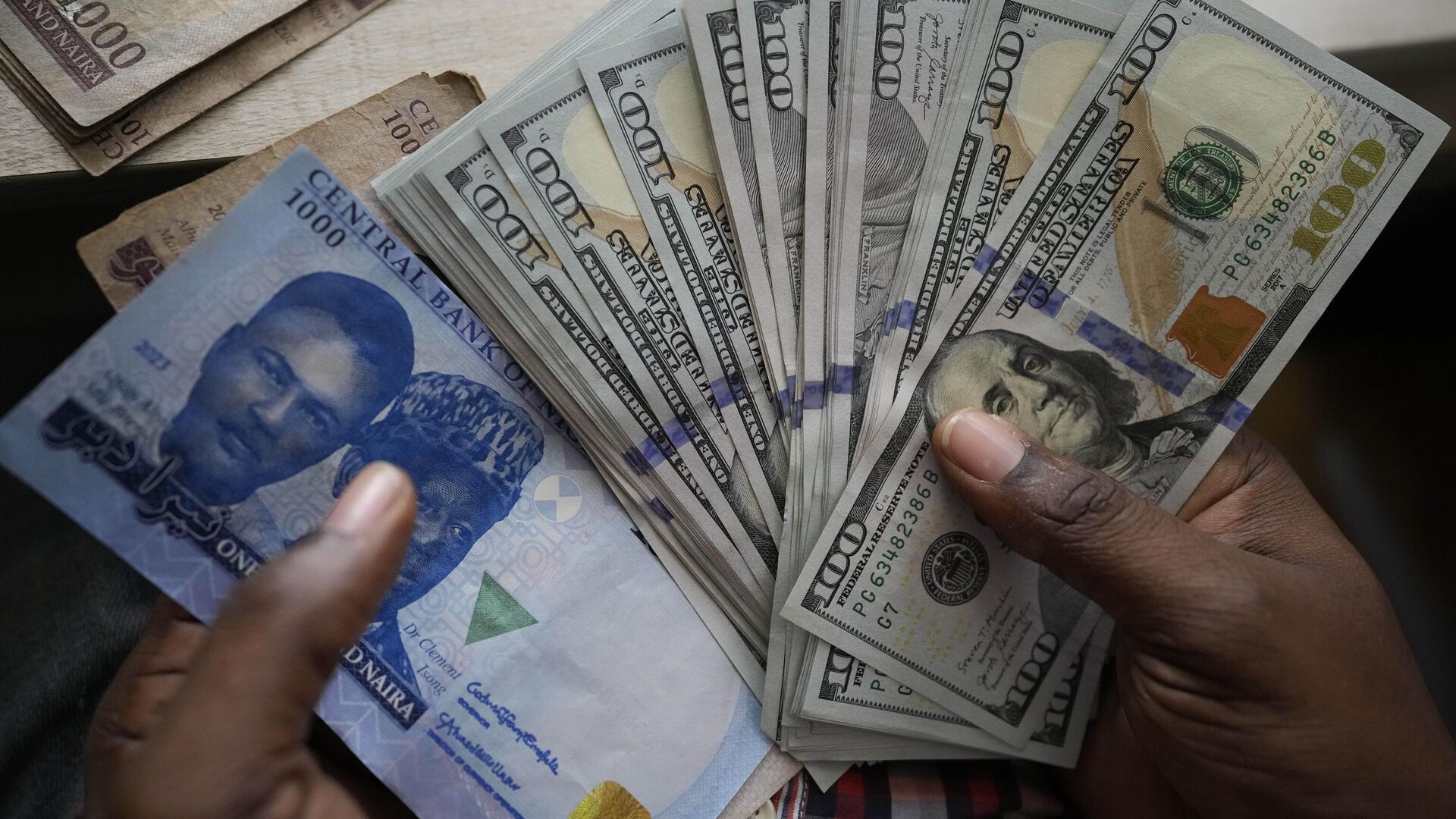
The naira strengthened to N1,337 per dollar at the Nigerian Foreign Exchange Market on August 28, while foreign reserves climbed to $53.11 billion as of August 24, the highest since January 2009, according to CBN data analysed by Nairametrics. The two prints arrived together, one on price and one on the buffer behind the price.
The numbers for the week ended August 28
- NFEM close: N1,337 per dollar on August 28, compared with N1,349.99 on August 24, up 0.96 per cent on the week (CBN website, Nairametrics).
- Path through the week: Opened N1,349.99 on August 24, N1,343 on August 26, N1,336 on August 27, then N1,337 on August 28, trading in a N1,335 to N1,350 range. Tuesday was closed for the public holiday.
- Parallel market: N1,403 per dollar on August 28, from N1,407 the day before.
- Turnover: NFEM turnover $2.71 billion for the four trading days, down 48.7 per cent from $5.28 billion the prior week (August 17 to 21). Daily splits were about $731.18 million on August 24, $913.76 million on August 26 and $1.06 billion on August 27.
- Reserves: $53.11 billion on August 24, up from $49.96 billion on June 3, a rise of about $3.15 billion in under three months. The balance crossed $52 billion on July 27 and $52.86 billion on August 21, now $142 million below the $53.25 billion peak of January 12, 2009.
- Year to date build: Nairametrics put the 2026 reserve accretion at $7.09 billion, already above the CBN’s projection of $51.04 billion for the full year of 2026.
Put simply, the naira edged up while far fewer dollars changed hands.
Why lower turnover with a firmer naira matters
A stronger close on thinner volume can read two ways. In a market where the CBN says its own intervention is now about 1.2 to 1.3 per cent of turnover, according to Governor Olayemi Cardoso in May, a quieter week is not automatically tight supply. It can also reflect calmer order flow after heavy weeks.
The prior week had set a 2026 high at $5.28 billion, including single-day prints that pushed year to date FX market volumes past $5 billion. That sort of spike often follows portfolio rebalancing and lumpy corporate demand. The pullback to $2.71 billion looks more like normalisation than stress, but it deserves a watch list:
- If turnover stays light while the naira holds near N1,340, that is stability with depth to rebuild.
- If turnover stays light and the parallel gap widens again, that is a flag that official and street pricing are diverging.
For context on how the two windows interacted earlier in August, our note on the naira FX gap below 2 per cent mapped the gap compression. This week extends that story.
The reserve buffer behind the rate
Reserves provide time, not a target. At $53.11 billion the CBN has more room to smooth flows without defending a level. Two linked points stand out from the CBN print:
- Source of the build. CEO of Nisela Capital, Dr Jerry Igwilo, linked the accretion to higher crude dollar receipts as oil moved higher. Brent settled at $89.31 on August 29, West Texas Intermediate at $83.40, both lower on the week but still supportive for export receipts. Oil swings remain the fastest lever on reserves.
- Sustainability cue. The same commentary stressed that sustainability rests on oil revenues, capital inflows and FX market performance together. That is why the FTSE Russell confirmation matters in the same week. Returning to Frontier Market from September 21 brings a new channel for capital inflows beyond oil. CBN data earlier put July remittances at a record $947 million, close to the CBN’s $1 billion monthly goal, another non-oil leg.
The reserve level now sits above $52.52 billion as of July 17, a figure the CBN at the July MPC said covered about 11 months of imports. The path from $50.47 billion in late May to $53.11 billion in late August is a steady climb month to month, not a one-off jump.
What this means for rates and the market
A firmer naira and fatter reserves ease near-term pressure on the MPC path that held the MPR at 26.5 per cent on July 21 as headline inflation eased to 15.91 per cent. Our CBN hold note unpacked why the committee called the single-digit goal delayed, not derailed.
At the same time, the CBN’s liquidity stance stayed tight. It mopped up N4.72 trillion via OMO on August 26 and 27 at yields close to 20 per cent, with subscriptions of N8.62 trillion on N2.0 trillion offered. That tug with primary repayments left a net withdrawal of about N1.18 trillion over two days, yet the Standing Deposit Facility still held N3.42 trillion on August 28, a sign of system liquidity. The NGX Banking Index rose 2.89 per cent to 2,544.92 in that week, alongside the broader 0.81 per cent gain to 241,298.47.
What to watch
- Next weekly turnover: Does activity rebound from $2.71 billion or settle in the $2.5 to $3.5 billion corridor.
- September T-bill auction: The N700 billion sale on September 3 is the next price discovery for one-year yields, which eased 44 basis points in the prior auction as N3.63 trillion chased N500 billion.
- Reserve continuity: Whether the daily reserve print holds above $53 billion into early September, or slips with a softer oil leg.
- Parallel gap: The N1,403 street close versus N1,337 official leaves a gap near 4.9 per cent, wider than the sub-2 per cent read earlier in August. Watch if it narrows with volume.
Frequently asked questions
Frequently asked questions
Is the naira move intervention?
Governor Cardoso said in May that CBN activity was about 1.2 to 1.3 per cent of FX turnover, far below the heavy intervention of prior years. The bank describes the regime as willing buyer, willing seller under its FX Code and electronic platform. This week’s turnover fall does not by itself signal a step-up in intervention.
Why did reserves rise while turnover fell?
They measure different things on different clocks. Reserves are a dated stock of external assets. Turnover is weekly flow at the NFEM. Reserves can rise on oil receipts, portfolio flows and remittance settlements that do not all print as same-day NFEM volume.
Does more reserves mean a stronger naira target?
No fixed level has been set. At the July MPC the CBN said reserves covered about 11 months of imports, well above the three-month benchmark. Higher reserves expand the buffer to absorb shocks, they do not set a naira level.