Tutorials
A beginner's guide to reading an NGX earnings
Demystifying Revenue, PAT, and EPS. Learn how to quickly scan a Nigerian Exchange company's financial statements to see if they are actually making money.
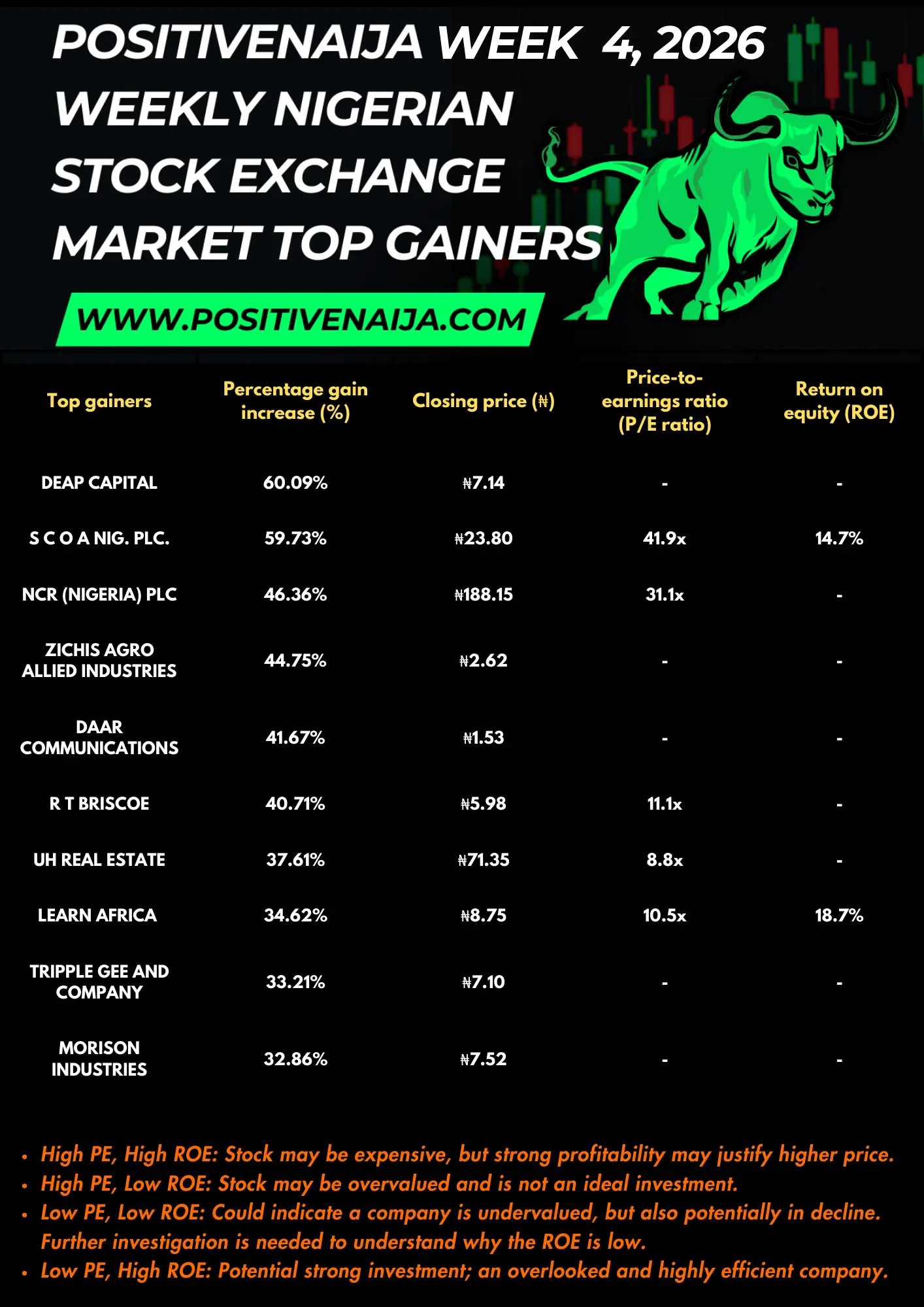
When a company listed on the Nigerian Exchange (NGX) publishes its quarterly or full-year financial statements, the document is often 60+ pages long, filled with complex accounting jargon.
For the average retail investor, reading the whole document is unnecessary. You only need to locate and understand a few key metrics to determine if the company is healthy, growing, and likely to pay a dividend.
Here is how to slice through the noise and read an NGX earnings report like a pro.
The big three: Revenue, PAT, and EPS
When you download the PDF from the NGX website or the company’s investor relations page, scroll directly to the Statement of Profit or Loss (often called the Income Statement).
Look for these three critical lines:
1. Revenue (or Gross Earnings)
This is the “top line.” It represents all the money the company brought in from its core business operations before any expenses were deducted. For a bank (like Zenith or GTCO), this is usually labelled “Gross Earnings” and includes interest income and fees.
- What to look for: Is it growing compared to the exact same quarter last year? In an inflationary environment like Nigeria, revenue must grow just to keep pace with costs.
2. Profit After Tax (PAT)
This is the “bottom line.” After the company pays for raw materials, staff salaries, electricity, loan interest, and government taxes, what is left over?
- What to look for: A company can have massive revenue but negative PAT (a loss) because their costs are out of control. Always prioritize PAT growth over pure Revenue growth.
3. Earnings Per Share (EPS)
This is the most important metric for you, the shareholder. EPS takes the total Profit After Tax and divides it by the total number of shares in existence.
- What to look for: If a company reports an EPS of ₦5.00, it means for every single share you own, the company generated ₦5.00 of profit.
The step-by-step reading flow
Analysing an earnings release in 5 minutes
-
Check the comparative periods
Always compare Q2 2026 to Q2 2025. Never compare Q2 to Q1. Many Nigerian businesses are seasonal (e.g., breweries sell more during December holidays). Year-on-year (YoY) comparison is the only accurate measure of growth.
-
Check the Net FX Impact (Crucial for NGX)
Look for the line item called “Net Foreign Exchange Loss/Gain.” Since the Naira devaluation, many solid companies (like MTNN or Nestle Nigeria) reported huge overall losses despite strong revenue. Why? Because they owed dollar-denominated debts, and the Naira cost to repay those debts skyrocketed. Always check if the loss is operational or purely FX-driven.
-
Check the Cash Flow Statement
Profit can be manipulated by accounting tricks, but cash cannot. Scroll to the Statement of Cash Flows and look at “Net Cash from Operating Activities.” If the PAT is wildly positive but the Operating Cash Flow is deeply negative, the company is making “paper profits” but failing to actually collect cash from its customers.
Frequently asked questions
Frequently asked questions
Where do I find these earnings reports?
The most reliable source is the official NGX Corporate Disclosures portal. You can also find them on the “Investor Relations” page of the specific company’s corporate website.
What is P/E Ratio and how do I calculate it?
P/E (Price-to-Earnings) ratio compares the current stock price to the EPS. If a stock costs ₦50.00 and the EPS is ₦5.00, the P/E ratio is 10. It means it would take 10 years for the company to earn back its purchase price. A lower P/E generally means the stock is cheaper.
What if the company reports a loss?
Not always. Investigate why they reported a loss. If it was a one-time impairment charge or an accounting FX loss, but their core revenue is still growing strongly, it might be a temporary blip. If their core revenue is shrinking, that is a major red flag.
Common mistakes and how to avoid them
- Treating the app as the market. Your broker or fintech shows a price, but settlement, ownership, and corporate actions sit with CSCS. If you skip the CSCS step you own the display, not the asset. Use our CSCS guide to confirm the account that actually holds the securities.
- Mixing up yield and return. A T-bill yield, a money market rate, and a stock dividend yield are quoted differently and land at different times. Map each to when cash actually hits your account using the Treasury bills starter and the FGN Savings Bonds walkthrough.
- Forgetting the settlement clock. Since June, NGX trades settle on T plus 1. If you sell to fund a new purchase, the cash is not instant. Check settlement timing in our T plus 1 explainer before you chain trades.
Keep a single checklist for every new product: where the asset is held, when cash settles, what fees apply, and where you verify the quote. Run that four-point check and most of the avoidable errors disappear.
Common mistakes and how to avoid them
- Treating the app as the market. Your broker or fintech shows a price, but settlement, ownership, and corporate actions sit with CSCS. If you skip the CSCS step you own the display, not the asset. Use our CSCS guide to confirm the account that actually holds the securities.
- Mixing up yield and return. A T-bill yield, a money market rate, and a stock dividend yield are quoted differently and land at different times. Map each to when cash actually hits your account using the Treasury bills starter and the FGN Savings Bonds walkthrough.
- Forgetting the settlement clock. Since June, NGX trades settle on T plus 1. If you sell to fund a new purchase, the cash is not instant. Check settlement timing in our T plus 1 explainer before you chain trades.
Keep a single checklist for every new product: where the asset is held, when cash settles, what fees apply, and where you verify the quote. Run that four-point check and most of the avoidable errors disappear.
You don’t need a degree in finance to understand what the numbers mean. By focusing on Revenue, PAT, EPS, and Cash Flow, you can quickly separate the strong, dividend-paying companies from the struggling ones on the NGX. See this framework in action in our Q2 2026 earnings season preview.