Tutorials
What the CBN's MPR and CRR mean for your money
The monetary policy rate and cash reserve requirement shape saving, lending and market rates. What they are, and where they stood after July 2026.
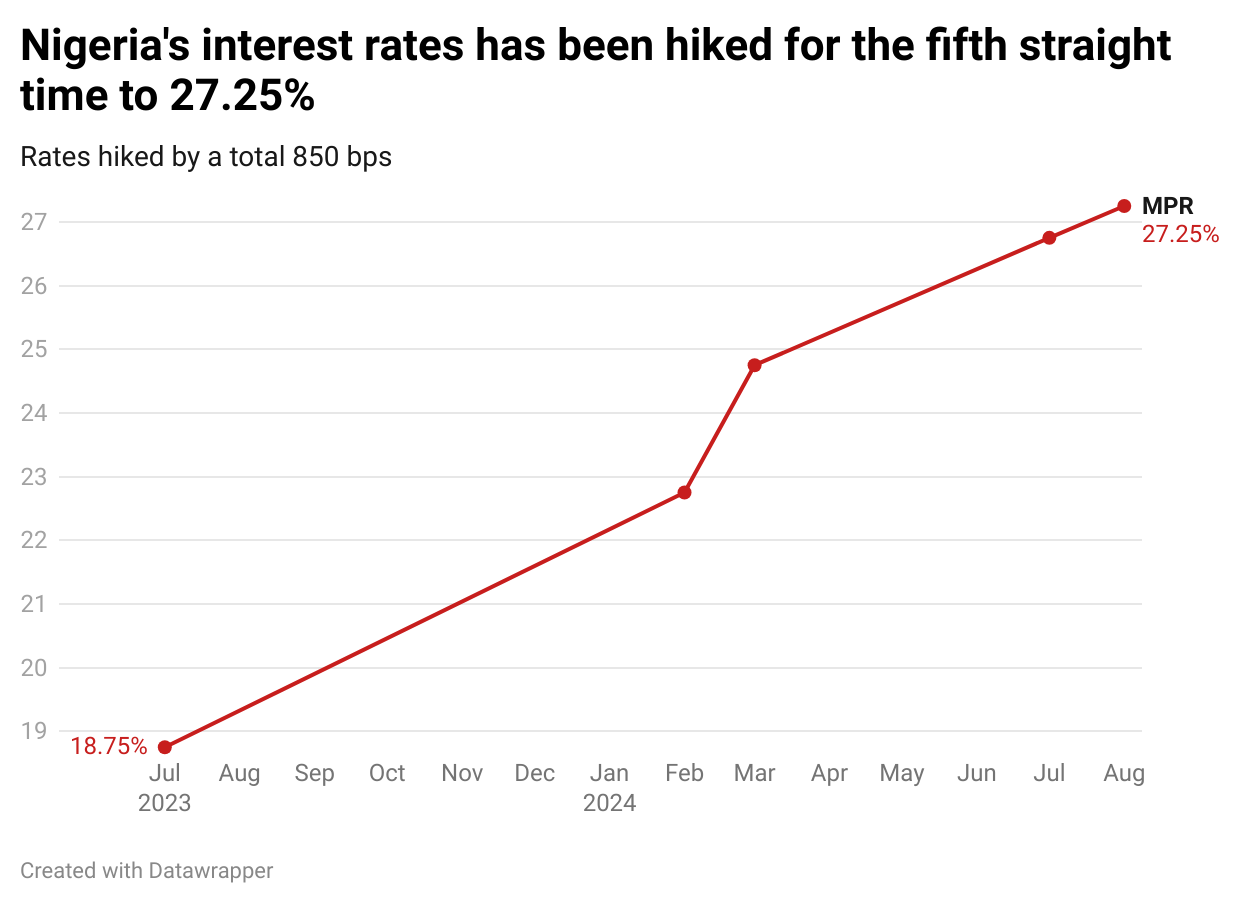
When the Central Bank of Nigeria holds the Monetary Policy Rate at 26.5 per cent, as it did on July 21, 2026, the decision travels through the economy in ways you can feel: the interest on your term deposits, the rate on a loan, the yields on Treasury bills. This guide explains what the MPR and the Cash Reserve Requirement actually are, and how the two of them steer the rates you see every day.
MPR in plain language
The Monetary Policy Rate is the benchmark interest rate set by the CBN’s Monetary Policy Committee. It is not a rate you borrow or lend at directly. It is the anchor around which the rest of the money market prices itself.
The mechanics run through two facilities, known as the corridor:
- Standing Lending Facility: banks borrow from the CBN at MPR plus 50 basis points. After the July hold, that is 27.0 per cent.
- Standing Deposit Facility: banks park surplus cash at the CBN at MPR minus 450 basis points, which is 22.0 per cent after the hold.
So the corridor is the band from 22.0 to 27.0 per cent, and banks price their own lending and deposit offers inside that range. When MPR rises, banks’ cost of funds rises, and rates you see on deposits and loans drift up with it. When MPR falls, the pressure reverses.
CRR in plain language
The Cash Reserve Requirement is the share of deposits banks are required to keep at the CBN, earning nothing. After the July 2026 decisions:
- 45 per cent for deposit money banks.
- 16 per cent for merchant banks.
- 75 per cent on non-TSA public sector deposits.
You can think of it as a system-wide safety deposit: the CBN locks part of every naira deposited, so banks have a smaller pile to lend back out. That sequestered liquidity is one of the tools holding the naira steady and pushing inflation down, and it is why the CBN can keep banks’ lending capacity in check without touching MPR every meeting.
What the July 2026 hold tells you
The MPC has now held twice after a single cut: February’s 50 basis point reduction took MPR from 27.0 to 26.5 per cent, and both the May and July meetings kept it there. The reason sits in the inflation data. Headline inflation ran at 15.91 per cent year-on-year in June, down from 15.93 per cent in May, the first decline after three straight monthly rises. Food inflation, the harder problem, still ran at 17.52 per cent.
The CBN’s reading is that the disinflation is working but not finished, and the Goveror has said the path to single digits was delayed, not derailed, by global shocks. Reserve strength backs the stance: external reserves stood at $52.52 billion in mid-July, about 11 months of import cover. So the hold is a “stay the course” signal, aimed at locking in the inflation gains before any easing.
How this reaches your wallet
- Savings and term deposits. With MPR at 26.5 per cent and deposits held inside the corridor, banks can pay meaningful rates on term deposits. The floor under rates is what makes naira savings vehicles attractive right now. Our Treasury bills guide shows the comparison with T-bill discount rates.
- Loans. Banks price credit off their funding costs. An MPR hold means no new pressure on loan rates, but it also means none of the relief that a cut would bring.
- The stock market. High rates compete with equities for money, which is why bank stocks, the direct beneficiaries of wide margins, have been the market’s leaders while the index trades near record levels.
Frequently asked questions
Frequently asked questions
What happens when the MPR goes up?
Banks’ cost of funds rises, so lending and deposit rates drift up. Borrowing gets more expensive, saving gets more rewarding, and money becomes scarcer across the economy. That is the intended medicine for inflation.
Does the CRR affect my bank account directly?
Not as a line item. It affects how much your bank can lend, which shapes credit availability and what banks are willing to pay for deposits. The 45 per cent requirement is one reason competition for deposits is fierce.
Why are term deposit rates so high right now?
Because the MPR floor and the corridor structure keep short-term rates elevated. Banks pay more to hold your money because money itself is scarce and expensive.
What is the Nigerian Overnight Financing Rate?
The NOFR is the CBN’s new official overnight risk-free benchmark, built from actual interbank transactions. It is meant to replace judgment-based rates and becomes a pillar of the planned inflation-targeting framework.
Common mistakes and how to avoid them
- Treating the app as the market. Your broker or fintech shows a price, but settlement, ownership, and corporate actions sit with CSCS. If you skip the CSCS step you own the display, not the asset. Use our CSCS guide to confirm the account that actually holds the securities.
- Mixing up yield and return. A T-bill yield, a money market rate, and a stock dividend yield are quoted differently and land at different times. Map each to when cash actually hits your account using the Treasury bills starter and the FGN Savings Bonds walkthrough.
- Forgetting the settlement clock. Since June, NGX trades settle on T plus 1. If you sell to fund a new purchase, the cash is not instant. Check settlement timing in our T plus 1 explainer before you chain trades.
Keep a single checklist for every new product: where the asset is held, when cash settles, what fees apply, and where you verify the quote. Run that four-point check and most of the avoidable errors disappear.
Verify: read the July 2026 MPC statement on the Central Bank of Nigeria website.