
Stock Updates
NGX breadth check: 26 gainers, 63 losers, ASI at
The All-Share Index closed at 245,573.60 after a week in which losers outnumbered gainers almost three to one. What narrow breadth means. Learn what it means...
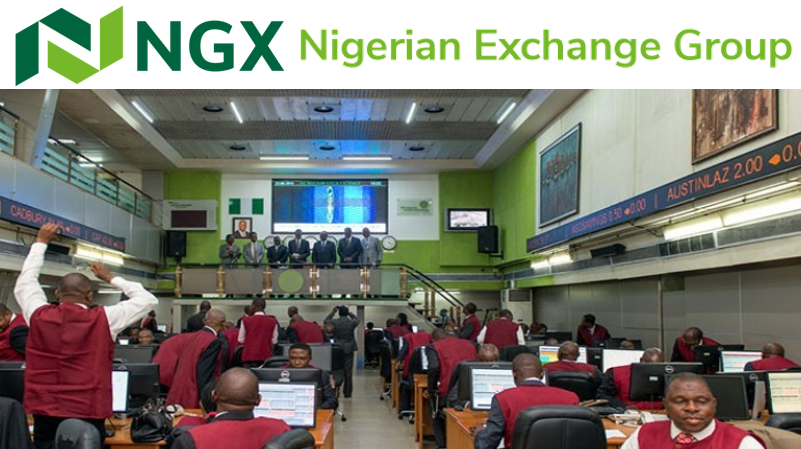
The NGX All-Share Index rose 0.12 per cent week-on-week to close at 245,573.60 points on Friday, August 7, 2026, with market capitalisation up about N187 billion to N158.51 trillion. The headline says up. The breadth says otherwise: 26 stocks gained against 63 losers across the week (Guardian weekly report).
The weekly ledger
- Breadth ratio: 0.41, meaning roughly two losers for every gainer, with 26 up and 63 down.
- Turnover: 5.34 billion shares worth N139.17 billion in 262,224 deals. Value rose 4.70 per cent week-on-week while volume fell 65.64 per cent, a sign of fewer, larger trades.
- Year-to-date: the index is up 57.81 per cent for 2026.
- The week’s range: a high of 245,730.53 on Monday and a low of 244,802.83 on Tuesday, against a July month-end close of 245,283.68 (Nairametrics).
Friday itself repeated the pattern: the index added 0.15 per cent while 24 stocks fell and 22 rose. The banking index rose 1.53 per cent to 2,586.38 points, 1.52 billion shares traded, and FTG Insurance was the most traded stock with 824.46 million shares, more than half the day’s volume (Nairametrics).
Why a rising index can hide a falling market
The ASI is market-cap weighted, so heavyweights set the direction. When banking giants like First HoldCo, up 12.2 per cent on the week, and FCMB, up 13.1 per cent, carry the index while Thomas Wyatt drops 26.7 per cent and Trans-Nationwide Express 23.8 per cent, the index and the typical stock tell different stories. Our sector indices guide covers exactly how the weights are built.
Breadth is the early warning system: a narrow market can stay narrow for a while, but a broadening rally has more fuel. The June wipeout showed how fast sentiment reversed when selling became broad; narrow rallies carry the opposite risk, that a few large positions hold the whole market up.
What to watch
Whether the second week of August broadens the advance beyond banking, the earnings releases that arrive with the Q2 season, and the depth of turnover: the week’s best gainers were AVA Capital (+33.3 per cent), FCMB (+13.1 per cent), First HoldCo (+12.2 per cent) and FTG Insurance (+11.1 per cent), a list heavy on banks and new listings, not exactly a broad base of support.
Frequently asked questions
Frequently asked questions
How can the index rise when most stocks fell?
The All-Share Index is weighted by market capitalisation, so large companies move it more than small ones. When banking heavyweights gain, they can push the index up while most smaller stocks fall.
What is a good breadth ratio?
Above 1.0 means gainers outnumber losers, a healthy advance. The 0.41 recorded in the first week of August means losers outnumbered gainers almost three to one, the signature of a narrow, concentrated rally.
Does a narrow rally change what matters?
It changes the information you rely on. In a broad rally the index tells you most of the story. In a narrow one, sector indices and individual volume matter more than the day’s close.
How to use this update in your own review
This note is built to be read alongside the filing and the price history, not instead of them. A single session move tells you what the market paid today, but the why sits in three places you can check in under five minutes.
- The filing or disclosure. Start with the source. For NGX names that is the corporate disclosure on the Exchange, the audited report, or the dividend announcement. Read the headline number, then the note on the event that triggered it (corporate action, earnings, sector move).
- The price and volume tape. Compare the close to the 20-day and 50-day average price, and check whether volume rose with the move. A price gain on thin volume often fades, while a gain that carries volume suggests broader participation. Our guide to reading NGX earnings reports shows where the turnover and deals lines sit on the daily report.
- The sector context. No ticker moves alone. If banks led the week, check the NGX Banking Index and the breadth count from our sector indices explainer. If consumer names lagged while oil and gas led, the driver is sector rotation, not a single-stock story. That framing helps you separate a market-wide bid from a stock-specific one.
A short checklist before you act: confirm the corporate action date with your broker or CSCS via our CSCS account walkthrough, confirm the settlement cycle under T plus 1, and note the next catalyst (earnings, dividend qualification, or MPC date). Those three checks prevent most of the mistakes that turn a good update into a rushed decision.
Verify: confirm gainers, losers and index levels on the NGX website.